
We CU Educating at Centenary University!
Clinical Classroom
A staged teaching environment courtesy of Kappa Delta Epsilon Honor Society (KDE).
The clinical classroom housed in Littell 102 is a teaching laboratory that is designed to mimic a K-8 general education classroom setting that is aligned to support research-based best teaching practices. Kappa Delta Epsilon Honor Society (KDE) initiated and created the vision for the clinical classroom, generously donated the materials, and manages its maintenance and use. This is a gift to students and professors at Centenary University from KDE who saw a need for this type of setting in their education program. Former and current KDE students hope this generous gift will provide preservice teachers with an enhanced educational experience within Centenary University’s School of Education and Humanities. View additional photos of the Clinical Classroom.
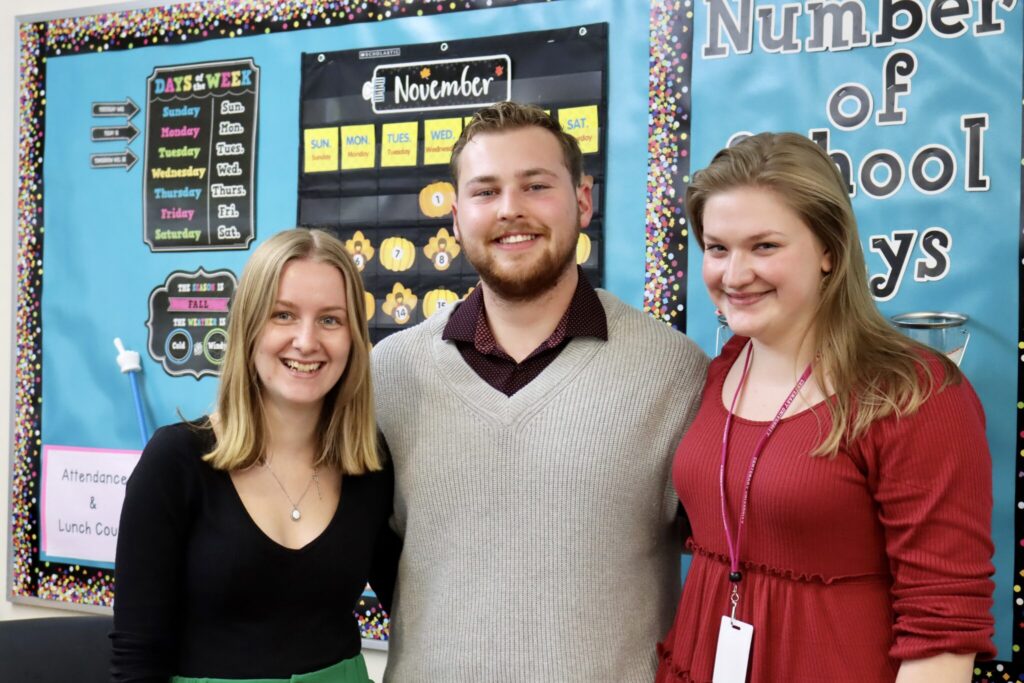
KDE Leaders and the Clinical Classroom
The clinical classroom is a space dedicated to classes for pre-service teachers that will provide a shell of a K-8 classroom setting so future teachers from multiple grade levels and disciplines can partake in learning to be teachers in an authentic environment.
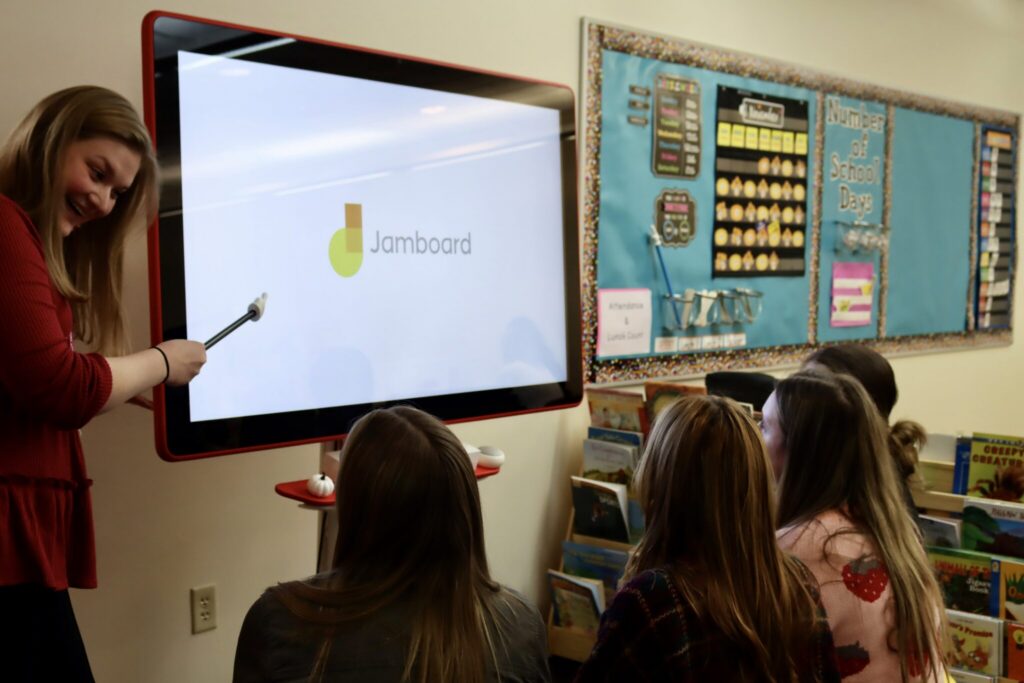
Demonstration teaching environment in the Clinical Classroom
The purpose of the clinical classroom is to remain a generic shell or skeleton of a classroom. This way individual students and instructors can personalize each class and experience during their specific time of use. Classes using the clinical classroom for each semester will be provided with shelves for professors to use each semester to store their personal materials.
Components of the Clinical Classroom Shell for general use include:
- Collaboration Area:
- Tables in the middle of the classroom for group work and university level instruction
- Whiteboards/projector
- Wiggle bands on the bottom of chairs
- Whole Group K-8 Instruction Area:
- Rug
- Sharing chair
- Floor lamp (alternative lighting)
- Easel (Mini-lessons, Positive Affirmations, etc.)
- Flexible seating (wedges, bouncy stools, etc.)
- Morning Meeting Materials
- Morning Meeting Bulletin Board
- Calendar
- Weather
- Days of the School Year
- Place Value Straws
- Coins
- Tallies
- Easel
- Morning Message/Minilessons
- Thematic Text Sets
- Display provided by Taylor Memorial Library and changing monthly: Authentic literature of varying genres and levels to represent the monthly theme.
- Small Group Instruction Area:
- Kidney shaped table and chairs
- Individual Wipe Board/Dry Erase Markers/Erasers
- Manipulatives/Multisensory Materials:
- There will be shared cabinets with manipulatives for use – magnetic letters, math items, multisensory materials, etc.
- Center/Station Tables:
- These tables will be positioned around the border of the room and will be empty so professors and students can set them up for each class according to the class’s needs. Students and professors will remove the materials after their class concludes each day.
- Morning Meeting Bulletin Board