
We CU Leading at Centenary University!
Bachelor of Arts in Communication
Develop strategic communication, media literacy, and storytelling skills applicable to careers in public relations, digital media, corporate communication, and content development.
Do you have a knack for communicating through words, radio, or video? A career in communication, media, and writing could be in your future.
Centenary University’s Department of Business, Media and Writing takes a unique approach to the field of communication. We’re one of only a few universities to concentrate writing, media, and video into one department. That’s because in the real world, professionals from these fields—writers, television producers, and radio talent—often collaborate to create messages that inform and entertain. It takes a versatile communicator to work across disciplines to create content that truly engages.
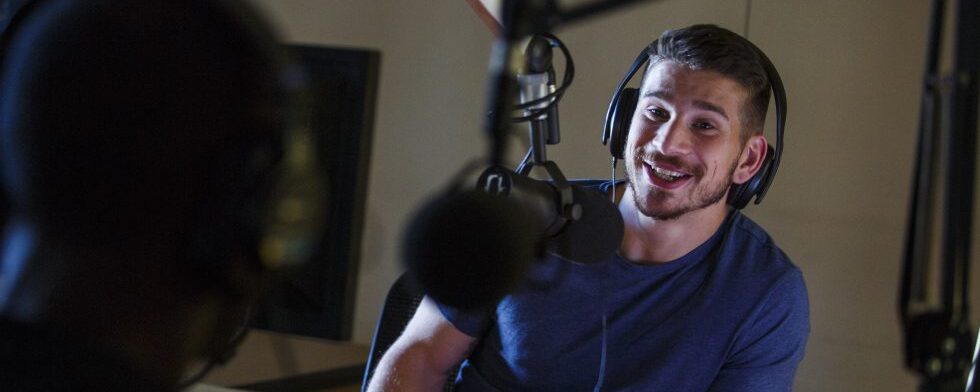
Get more than just an education with a concentration in Radio and Television. Are you ready to go “On Air?”
The only way to learn the broadcasting business is through hands-on experiences.
In the Radio and Television program at Centenary University, you will benefit from our modern broadcasting facilities and collaborate with full-time faculty members who have worked professionally in their respective fields for many years. With our small class sizes, you will have the opportunity to jump right into various aspects of radio and TV production.
Our facilities include a state-of-the-art radio production studio located in WNTI, Centenary’s internet radio station, which offers radio equipment and software for students.
Career assistance
With our Bachelor of Arts in Communication: Radio, TV, Film, students have gone on to careers in radio and video production and broadcasting. The skills learned in this concentration are also in high-demand in growing career fields including corporate communications and public relations.
During your time at Centenary, our Career Services Office will help you obtain part-time jobs and internships in the field. These experiences are critical to gaining entry into the broadcasting business.
Hands-on experiences
Students do not have to wait for a specific course to start working in our TV studio, video editing suites, internet radio station and audio production rooms. They can be used as soon as you are trained by our expert faculty and staff.
Whether you are interested in TV production, editing or radio station operations, our faculty members can provide you with the skills and training you need to start your career.
Your Future
Academic Advancement:
Next steps include MA in Communication, MFA/MA in Writing, digital media, UX/content strategy, grant writing, publishing, or technical communication certificate.
Career Pathways:
Film Critic, Film Producer, Screenwriter
Industry Outlook:
Film and media are growing, particularly with streaming platforms, but competition remains fierce.
Regional employers include
Audible; NJ PBS; News 12 New Jersey; Prudential Center / NJ Devils; NJPAC; Seton Hall / Rutgers communications offices; pharmaceutical/healthcare communications teams; nonprofit arts organizations.
Salary Outlook:
$40,000 – $75,000
Getting Started
For New Jersey entry-level roles aligned to BA in Communication: Radio/Television/Film, a reasonable starting range is approximately $40,000–$58,000, depending on role, licensure/certification, employer type, and prior experience.
Early Career and Progression
Approx. $65,000 midpoint at about five years, with higher earnings in specialized, licensed, technical, supervisory, or high-demand settings.
Approx. $85,000 average or attainable mid-career benchmark around ten years, especially for advanced credentials, management responsibility, or specialized practice.
*Salary and Outlook Data