
We CU Innovating at Centenary University!
Bachelor of Science in Forensic Science
Apply laboratory science to criminal investigation through training in evidence analysis and investigative techniques.
Some of today’s top crime fighters don’t wear a badge — they wear a lab coat
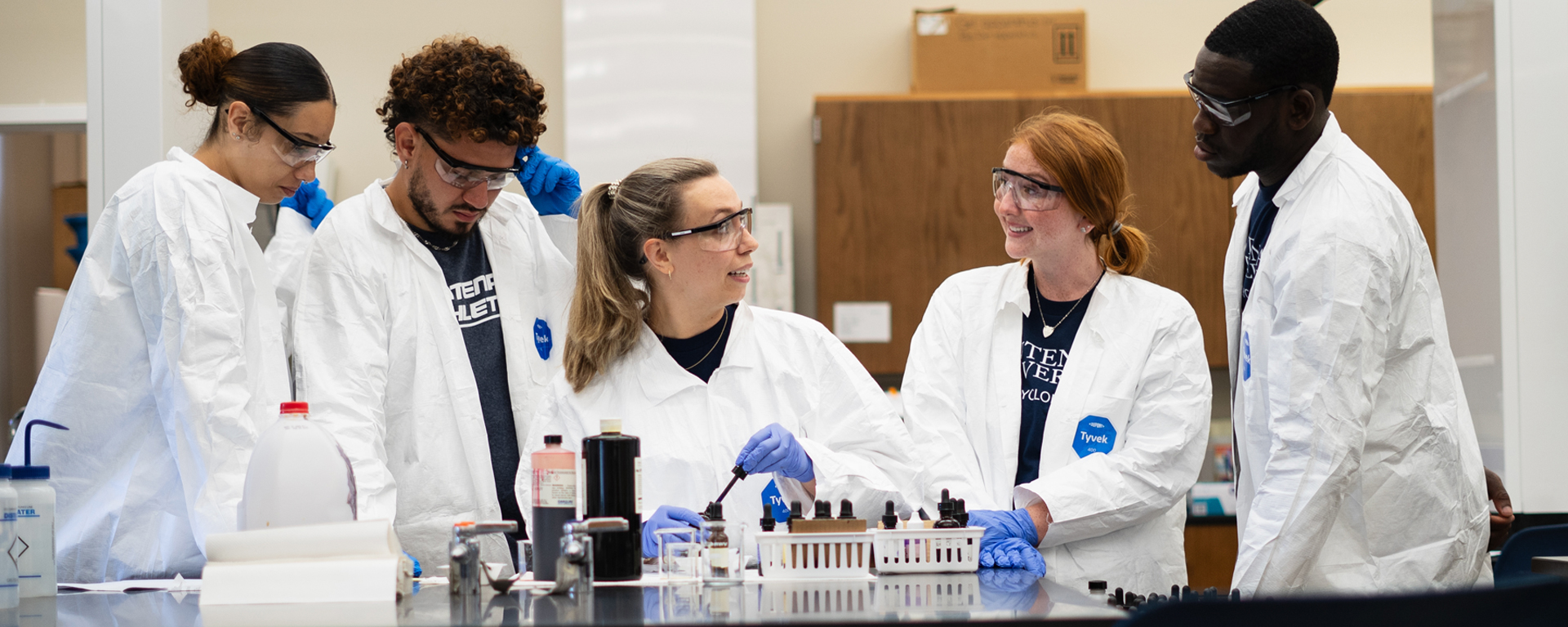
Centenary University’s Bachelor of Science (BS) in Forensic Science program provides real-world training in the application of science to criminal investigations. This program teaches you how evidence is analyzed to identify illegal activity in many situations — from personal and property crimes to crimes against the environment.
The Forensic Science curriculum closely follows our Biology program during the first two years with a strong mix of courses in the liberal arts and natural sciences. You will then move into classes that dig deep into the fields of criminal justice and forensics with topics such as criminal investigation, biochemistry and analytical chemistry.
A fast-growing career field
U.S. News & World Report recently named forensic science among its “Hot College Majors That Lead to Jobs.” In fact, employment of forensic science technicians is projected to grow 27 percent by 2024, much faster than the average for all careers, according to the U.S. Bureau of Labor Statistics.
You will leave Centenary prepared for positions that require a background in both theoretical and sophisticated, hands-on methods for investigating criminal activity. The program’s strong science focus will also allow you to pursue related careers in environmental testing and monitoring; chemical, pharmaceutical and biotechnology R&D; oil, mining and fracking industry positions; as well as consumer products and food quality jobs.
The program provides excellent credentials for entrance into health professional schools and graduate work in a variety of scientific and technological fields.
Marketable skills
Our Forensic Science program combines traditional classroom and science laboratory lessons with hands-on learning by doing. We place a particular emphasis on topics in analytical and bioanalytical chemistry that are critical in the modern forensic laboratory. These include
explosive and arson residue analysis, identification of illicit drugs in body fluids, biochemical toxicology assays, and DNA analysis. Along with these technologies, we teach appropriate ethical and legal considerations.
Launched in 2015, our Forensic Science degree program is quickly becoming a popular major on campus.
Your Future
Academic Advancement:
Next steps include Graduate study in biology, biotechnology, forensic science, environmental science, public health, PA/medical/dental/veterinary prerequisites, or laboratory certification.
Career Pathways:
Forensic Scientist, Crime Scene Investigator, Lab Analyst
Industry Outlook:
Growing interest in forensic science for law enforcement, particularly in larger urban areas.
Regional employers include
Merck; Johnson & Johnson; Bristol Myers Squibb; Becton Dickinson; Quest Diagnostics; Labcorp; Rutgers; NJ Department of Environmental Protection; environmental consulting firms; hospital laboratories.
Salary Outlook:
$50,000 – $80,000
Getting Started
For New Jersey entry-level roles aligned to BS in Forensic Science, a reasonable starting range is approximately $45,000–$65,000, depending on role, licensure/certification, employer type, and prior experience.
Early Career and Progression
Approx. $78,000 midpoint at about five years, with higher earnings in specialized, licensed, technical, supervisory, or high-demand settings.
Approx. $100,000 average or attainable mid-career benchmark around ten years, especially for advanced credentials, management responsibility, or specialized practice.
*Salary and Outlook Data